
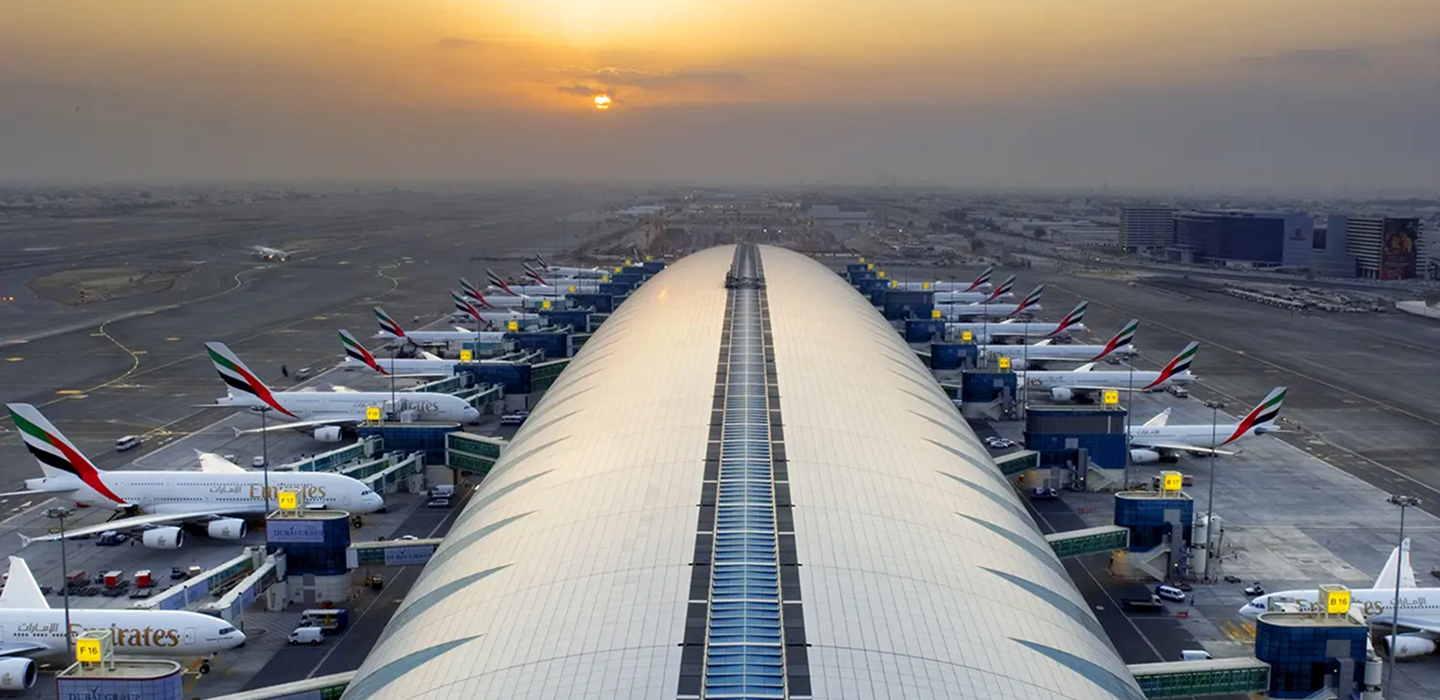


Overview
A groundbreaking architecture
project setting new global standards
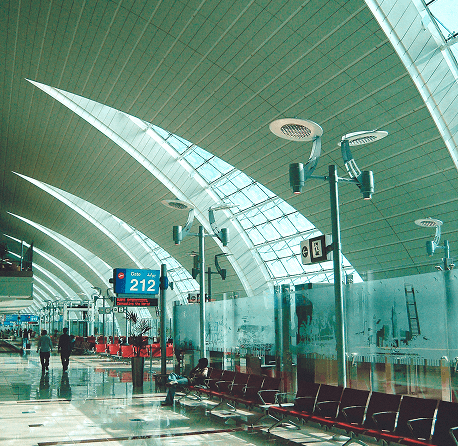
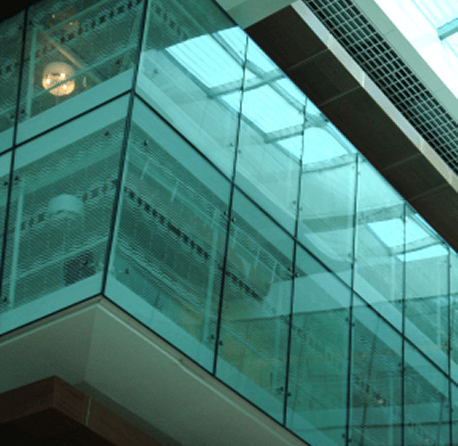
Scope of work: The project includes the design, supply, manufacture, and installation of roofing, façades, skylights, and glazed screens across various concourses. For Concourse A, it involves 7,000 sqm of standing seam roofing, 22,000 sqm of tension wall glazing, 6,400 sqm of stick system, and 2,700 sqm of semi-unitised/stick system. Concourse B features 70,000 sqm of standing seam roofing, 35,000 sqm of tension wall glazing, 5,000 sqm of stick system, and 15,000 sqm of semi-unitised/stick system. Additionally, Concourse B & Car Park includes 41,000 sqm of internal SST cladding and P.F. glazing. Concourse B DOM involves stainless steel, composite, and aluminium cladding, internal glazing, guardrails, and steel supports. Concourse C features 60,000 sqm of standing seam roofing and 10,000 sqm of semi-unitised/stick system. Concourse D has 50,000 sqm of standing seam roofing, while Terminal 2 and Maktoum International Airport Passenger Terminal include the design, supply, manufacture, and installation of 28,735 sqm of stick curtain walling.
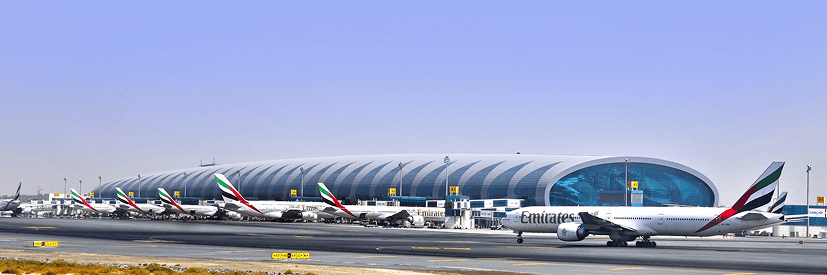
Dubai International Airport (DXB) served 86.4 million passengers in 2019, connecting over 240 destinations across six continents. With world-class facilities like the $1.2 billion Concourse D and Concourse A, the world’s largest purpose-built A380 facility, DXB is a global hub that connects travelers with airlines worldwide, including Emirates, which exclusively uses three of the airport’s concourses.
Key data
Impressive metrics that define
this extraordinary achievement
Technical details
Engineering that
holds it all together

Structural Support
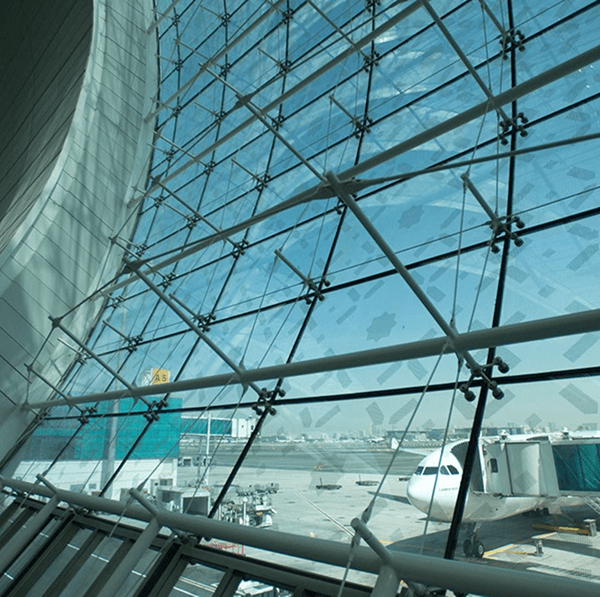
The teardrop windows use orthogonal tension rods to support curved glass, while the gable ends feature point-fixed glass walls held by spiders and pre-stressed tension rods, ensuring overall stability.

Load Distribution
Both systems transfer loads through stainless steel spiders and horizontal beams, with glass, wind, and maintenance loads efficiently channeled into the primary steel structure, maintaining stability and durability.

Parametric Design
Parametric software enabled precise design of both systems, allowing for customized glass shapes, frit patterns, and hole fixing points, ensuring a perfect fit with the structural model and accurate fabrication.

Pre-Tensioning Control
Pre-tensioning in both systems was carefully controlled, with spot checks for the teardrop windows and comprehensive load case consideration for the gable ends, ensuring optimal structural integrity.

Low Constraint Forces
The systems use flexible, restraint-free supports to minimize constraint forces. The gable ends allow for small rotations at the support points, while the teardrop windows are decoupled from deflections in the primary structure.

Seamless Fabrication
Design models for both systems were linked directly to CNC and deco print machines, enabling precise and error-free production, ensuring smooth installation of the complex glass units and structural components.


