

Scope of work
A groundbreaking architecture
project setting new global standards
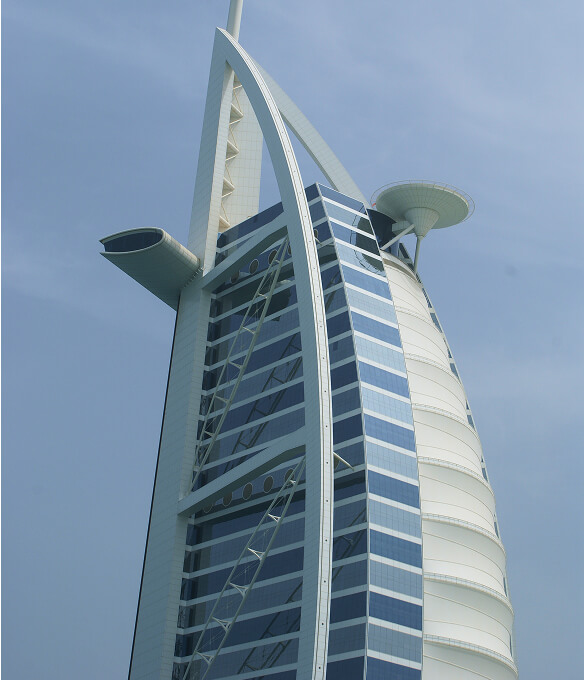
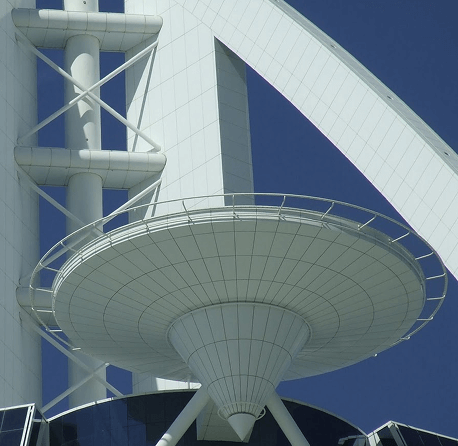
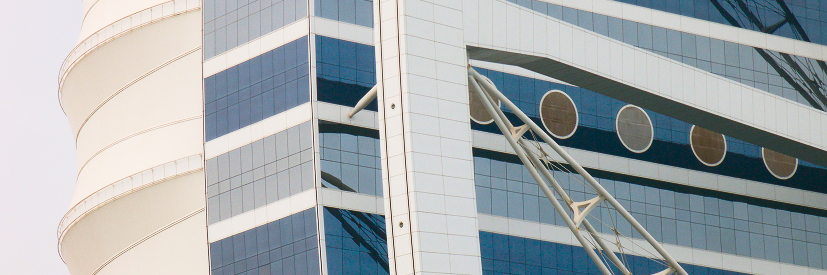
Scope of work: The project involves the design, supply, manufacture, and installation of 85,000 sqm of semi-unitized curtain walling systems, including 35,000 sqm of Mitsubishi aluminium composite cladding panels fixed on an extruded aluminium grid framework for the external envelope. It also includes 50,000 sqm of high-performance, pressure-equalised semi-unitized curtain walling engineered to withstand wind pressures up to 3.2 kPa. Additional works cover the cladding for the helipad at the top level and a suspended glazing assembly for the rooftop scenic restaurant.
Inspired by the sail of a ship, the Burj Al Arab was designed to be a distinctive landmark for Dubai. With its triangular form and striking silhouette, it became the world’s tallest hotel upon completion and features the world’s tallest atrium, rising 182 meters. As Dubai’s skyline evolves, Burj Al Arab remains an iconic symbol of the city’s transformation and global identity.